If Only People Cared


If only people cared. I hear that a lot. I say it a lot. The truth is people do care. They do what they can. There is plenty of bad news in this world for each and every one of us to care about. And that is the problem. We are all on cause overload. I am on cause overload.
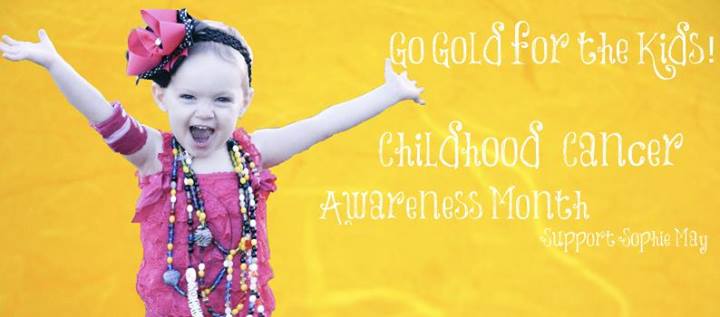
My Marine Mom friend has a 2.5 -year-old granddaughter, Sophie who has cancer and has been undergoing treatments for about 15 months now.  Many of us have followed Sophie’s progress, her good days and bad days, her absolute courage, on Facebook and on her CaringBridgepage. Her family has been courageous too. And on a mission, to help bring to the forefront the fact that childhood cancer is not funded like it should be and to raise awareness. The American Cancer Society only gives one cent of every dollar to Pediatric Cancer research and no one can figure out why this is so.
Approximately 7-9  kids die a day of cancer.  (Statistics are all over the map- I guestimated based on several different reports.)
September is Childhood Cancer Awareness Month

 
I have another Marine Mom friend whose sister died of breast cancer and she has been on a tireless mission to raise money for breast cancer research.  The projected statistics for breast cancer-for 2013- though greatly improved over years past, are daunting still.
·     About 232,340 new cases of invasive breast cancer will be diagnosed in women.
  • About 64,640 new cases of carcinoma in situ (CIS) will be diagnosed (CIS is non-invasive and is the earliest form of breast cancer).
  • About 39,620 women will die from breast cancer
  • Breast cancer is the second leading cause of cancer death in women, exceeded only by lung cancer. (in 2013)
My own personal cause has some big numbers too. Veterans with PTSD and Active Duty/ Veteran Suicides are at an all-time high. I have screamed this from the mountain-top with only those in my shoes taking notice. And maybe some of them found me to be too loud, too crazy, too driven.
According to this 2012 VA report 22 Veterans commit suicide daily. That is one every 80 minutes. Paul Riekhoff, the founder of IAVA (Iraq Afghanistan Veterans of America, stated “The country should be outraged that we are allowing this tragedy to continue. The trends are headed in the wrong direction,” As veterans, we at IAVA understand the spectrum of challenges facing veterans transitioning home, including the struggle with invisible wounds. One thing is clear; we need more researchand more collaboration.” 
PTSD awareness is sorely lacking – according to the Center for Ethical Solutions, nearly one soldier in five, or about 300,000 of the 1.6 million soldiers who have served in Iraq or Afghanistan, has post-traumatic stress disorder (“PTSD”) or major depression. My son has suffered from it, which brought it to the forefront for me. It is an invisible wound.
During my son’s time in the Marine Corps, I spent time as a volunteer for a Marine parent’s web- based group. We were an all-volunteer group of moms and dads that worked – we thought, tirelessly for our cause, which was supporting one another and our Marines. Our founder, worked even harder—sometimes around the clock. The message received from her, was that what we did was never enough. Never mind that most of us had jobs, never mind that most of us had families to take care of or that we put anywhere from 5 to 35 hours a week in on top of all that.
I understand now, she was frustrated. She wanted more for our guys and gals in harm’s way.  Like Sophie’s GrandMo is frustrated, Like Jill W. is frustrated, like I am frustrated over the lack of concern for what we think are monumental causes. What she (the founder of the group) didn’t realize then—but may have come to realize at some point was that everyone was just doing the best they could with what they had. It wasn’t ignorance, or apathy that kept them (us) from giving more. We just had no more to give. And who can judge what is too little?
Children are a precious gift—even the older ones. Everyone is somebodies baby. And that gives everything equal importance, in my mind at least.
We need to knock on the doors of corporations and government officials and stop berating our fellow sufferers.  Finesse donations, don’t scream for them.  Be grateful to those who can give time or money and try to understand those who can’t.
All of us just want to help people we love. That is what it all boils down to. There is nothing stronger in this world than love and maybe sometimes it makes us crazy. But I am willing to do what I can for my causes, and my friends causes—because that is what it’s all about.
If any of the above causes ring your bell, please feel free to donate your time or money or hold a fundraiser on behalf.  Or if you have a cause you would like to share about please do. Let’s start looking at these things like we are helping friends, because that is what friends do.
 
To Donate to Pediatric Cancer:
To Donate to Breast Cancer Research
To Donate for PTSD/ TBI and the Prevention of Suicide for Veterans
Or any local VA VFW center.


PTSD AWARENESS DAY

st1\:*{behavior:url(#ieooui) }

I’m not sure why we have to have specific days, weeks or months of the year to raise awareness on any number of issues that we should all be aware of all the time. I’m declaring today the day we recognize combat related PTSD (Post Traumatic Stress Disorder), and tomorrow too. And every day after that.
Combat PTSD has been front and center in the news for months. Maybe some people didn’t realize it though since not everyone calls a spade a shovel, like I do.
My awareness of combat related PTSD started long before it would personally affect me. Long before it was called PTSD. When I was about 10 years old, my mother told me that my favorite Great Uncle would “Never be the same after Iwo Jima.”  He never was.
Later, much later and shortly before his death at 89, he told me about piling the dead bodies and body parts and collecting their dog tags. He said he would never forget the carnage. There was no good war, he said.
Sixty –eight years after Iwo Jima (almost to the day) people are still in denial about Soldiers Heart, Shell Shock, Combat Fatigue, Post-Vietnam Syndrome and finally PTSD. It’s all the same – all these different names for the same thing.
The people in denial are the masses of Americans who may or may not read the news every day and for whatever reason are unable to connect the dots, the dots that are sometimes so blatant, so bright red, so screamingly apparent that I don’t know how anyone can miss them.  (I’m only talking about the US here- even though other countries have the same thing- some to such a degree the country as a whole may suffer.)
There are some military families that are in denial too. They think if their returning soldier or Marine just gets a job, just gets married, just has kids, just stops drinking, just comes out of their room, just acts normal, that everything will be fine. This is a stupid assumption and wishful thinking.
The more likely scenario is that these soldiers, sailors and Marines will come home from combat and try to assimilate but will not be able to relate to people who have not seen what they have seen nor done what they have had to do. They will drink too much, some will take medication (legal and illegal) some will take risks that no sane person would take, some will become sex addicts, some will become depressed and isolate, some will be angry, some will commit crimes and some will commit suicide. In fact, according to the US Department of Veterans Affairs, twenty–two veterans commit suicide a day. That is roughly one per 1.09 hours. Are you okay with that? I’m not.
Right now, there are approximately 21.5 Million Veterans in the United States. An estimated 62,619 are homeless. (I think that is a low estimate). The number of Veterans suffering from PTSD is almost impossible to figure since so often is it unreported and untreated and the Department of Veteran Affairs tracks it by conflict. Almost 50% of Vietnam vets suffered from PTSD. (They also had half the country hating them when they returned)  The Department of Veterans Affairs has quietly released a new report on post-traumatic stress disorder, showing that since 9/11, nearly 30 percent of the 834,463Iraq and Afghanistan War veterans treated at V.A. hospitals and clinics have been diagnosed with PTSD. (I would imagine the unreported would bring it up to 50%)
Now, you may wonder why I think you should be aware of these alarming numbers.  This is why. They need our help. They need understanding- and we have to educate ourselves so we don’t make the same mistakes the generation before us did with the Vietnam vets. The men and women coming home with PTSD are not feeling the love from their fellow Americans and in some cases they feel like their branch of service has used them up and then thrown them away. Sometimes it takes years for them to be able to work in the civilian world. Some may never get there. Some are so broken down they can barely function and need caregivers to make sure they get up, get dressed, eat and go to the VA.
We are talking about 22 year olds, 25 year olds, 30-year-old men, and women who may look twice their age due the overwhelming load they carry.  We – and by we I mean every single American, should be helping them carry the load.
The murder of Chris Kyle was a horrendous event and in my mind brought to the forefront how horrible PTSD can be… if we don’t learn to recognize it and deal with it as a by product of war. Plan on it, budget for it, have the medical facilities and faculty ready for it and most importantly, make it easier for these people to get the help they need.  Eddie Ray Routh had recently been released from the hospital- his parents pleas to the psychiatric hospital to keep him, fell on deaf ears. I have to wonder why? Was it money?
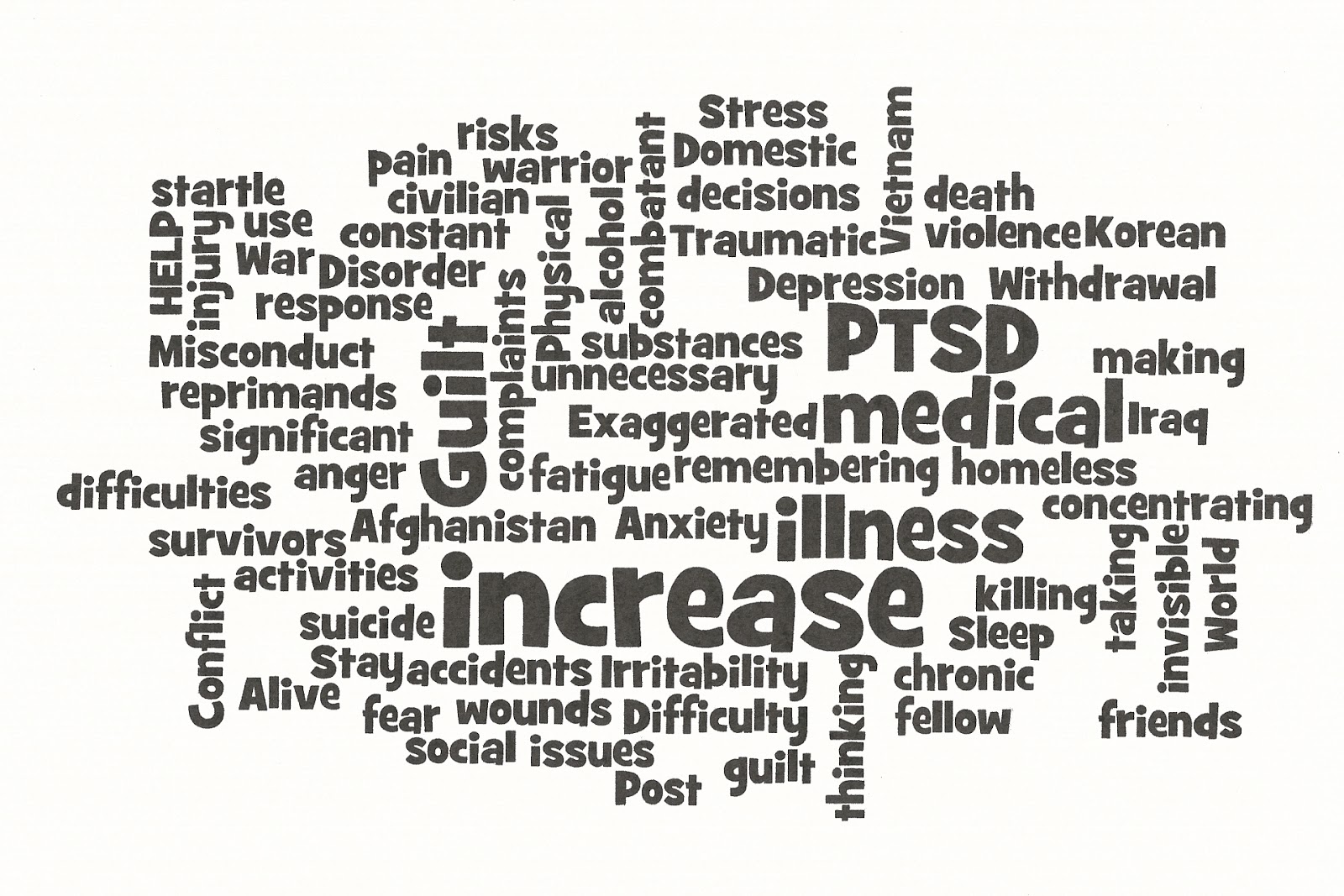
Most PTSD is not going to elevate to a murderous level, and maybe anger is not always part of combat PTSD, but it is often enough. The following are just some of the symptoms of combat related PTSD.
  • Irritability/ anger
  • Sleep difficulties and constant fatigue
  • Difficulty concentrating, remembering, thinking, making decisions
  • Depression
  • Guilt over killing a combatant or civilian
  • Guilt over the death or injury of a fellow warrior (survivors guilt)
  • Anxiety
  • Exaggerated startle response
  • Withdrawal from social activities and friends
  • An increase in accidents
  • An increase in taking unnecessary risks
  • Physical complaints (chronic pain)  and medical illness or fear of medical illness
  • A significant increase in the use of alcohol and other substances
  • Domestic violence
  • Misconduct issues or reprimands
The Soldiers, Marines, Airmen, and Sailors-  who volunteered to go into the service post 911 knew they could die. Of course, an 18 year old doesn’t really know what will happen to him if he lives to tell the story. In fact- few people will know what will happen. Parents themselves focus on one thing. Stay Alive. When they get home mom counts fingers and toes just like the day they were born. No visible damage and yay- everything is going to be fine.
For many of them, everything will be okay. For some, symptoms will not present for years. For others, the onset will be almost immediate- some before they are separated from the service.
The military has to do a better job. I was hopeful when General Shinseki the US Secretary of Veteran Affairs, was appointed to his position. Since that time, over four years ago, I have seen little progress in the area of combat related PTSD and the process that defeats many veterans 10 minutes after they walk through the VA doors.
There are civilians doing the job though. One such civilian is Dr.Bridget Cantrell. Dr. Cantrell is the founder of Hearts Toward Home International, which is a non profit organization dedicated to helping combat veterans and their family members. 
I first met Dr. Cantrell in 2006 at a Marines Parents Conference in Houston, Texas. My son, a Marine Corps Rifleman at the time, was getting ready to deploy to Iraq. Dr. Cantrell and her writing partner Chuck Dean, (a Vietnam vet) had just written Down Range, to Iraq and Back, A book that addresses PTSD our military personnel experience when returning from combat. After attending the panel discussion, I knew PTSD was something I had to fully understand. 
Since that time, Dr. Cantrell has helped me- help my son. She has written 3 more books Once a Warrior, Wired for Life, (with Chuck Dean)  Souls Under Siege: The Effects of Multiple Troop Deployments-and How to Weather the Storm and a workbook that accompanies Once a Warrior, and has two more coming out shortly.She devotes her life to helping these veterans.
There are other civilians doing their best to make a difference for our veterans. And together we can all make a difference.  First, though there has to be awareness, there has to be significant comprehension of what combat related PTSD is and what we as civilians can do to help. Removing the stigma is one way to help these men and women get the professional  help they need.
Let’s not wait for the PTSD Awareness Day (I think it’s sometime in June) . Let’s not wait until another Soldier, Sailor, Airmen or Marine hurts someone or commits suicide. Let’s start today. Spread the word-tell, let your Representativesand Senators  that you want to see some help for our veterans. If you can, donate or volunteer your time to the organizations that make a difference in the lives of these men and women.
And if you notice someone needing help, call the VA Hotline at  1-800-273-8255 Press 1
They fought for us- and now we need to fight for them.
~~~~~~~~~~~~~~~~~~~~~~~~~~~~

Additional resources from (USC) University of Southern California –

Military Mental Health Resource Guide to Depression, TBI & PTSD

And if you are interested in a career in  Military Social Work

MSW@USC


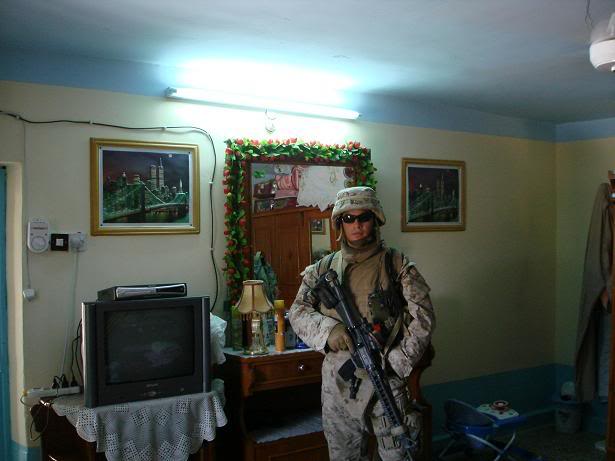
This is my Marine (who joined the USMC in 2003 the minute he turned 18) in a house in Iraq. Those are pictures of the Twin Towers on both sides of the mirror in the background. He wasn’t there to make money, or see the world, or get his college paid for. He was there because he thought he could make a difference. I think he did, and I can only repay him by making sure he and his brothers-in-arms, are taken care of.