My Manic 2015

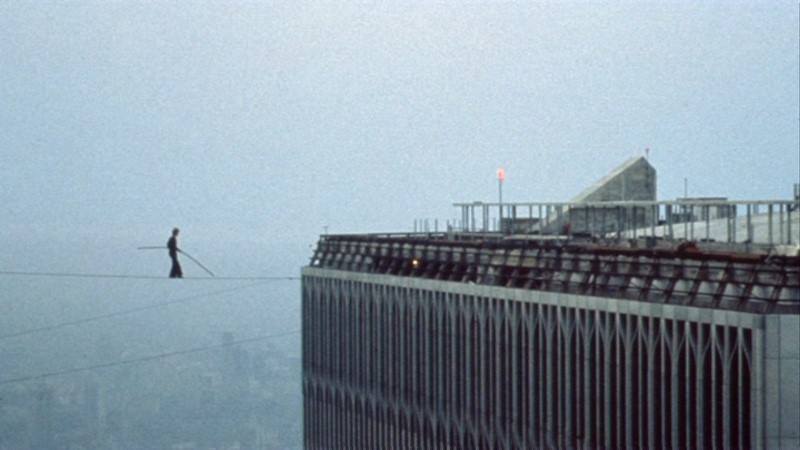
It was a hard year and my best year too. A manic year really. My highest high and my lowest low came simultaneously. As one life was entering –another was slipping away, and I did a balancing act that would rival Philippe Petit, while helping others not fall off their rope. Take my hand. Take my hand. Take my hand.  

I felt completely alone, battling demons that were taking away the love of my life—the air in my lungs. And suddenly 30 or so of my best friends and family surrounded me, lifted me up and supported me through the following months, so I could help the people that needed me.
Then my light arrived. My little love arrived with healing powers, the likes of which are for fairytales only—not real life. Certainly not my life.

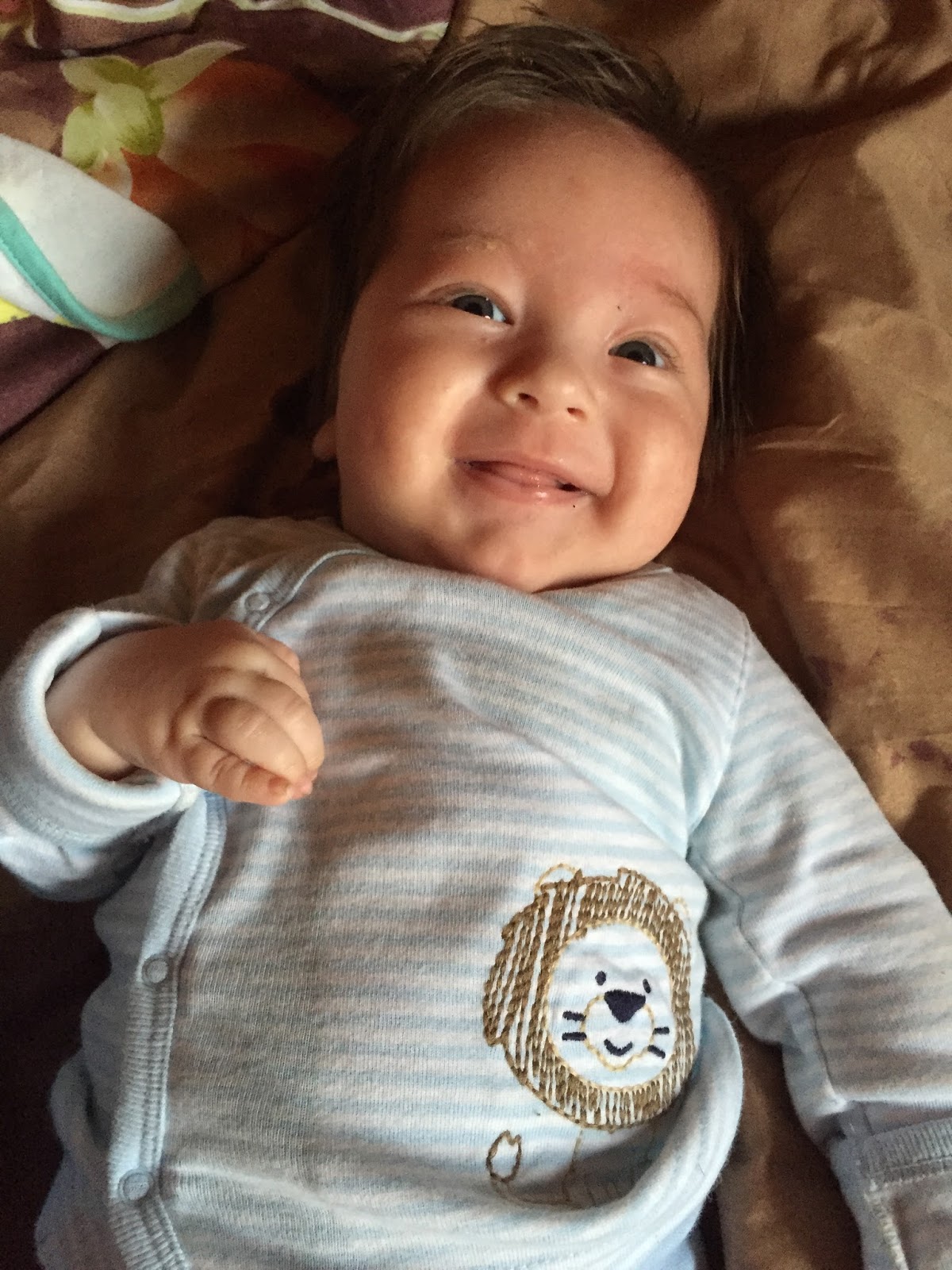
He arrived in the spring, bringing hope, like all new things in spring. A ray of light, a purpose, a cause to keep not just me moving forward but others too. More than a few of us needed him. I cried tears of joy and then set out to do the impossible—and did it with the help of my friends.
It’s always like this—every year, losses and gains. People pass away, babies are born. It’s the way of the world. But this year was different. It was a massive rescue mission, headed by old friends—some of whom are Marine Moms, others who have known me 40+ years and others who have known me fewer years, but immediately understood the urgency—the life or death of everything.
The best was going to Europe to meet my grandson thanks to my friends—and then having he and his mom stay with me for almost 3 months. No- wait. The best was my son coming back from the edge. Or maybe it was all of us together for the best Thanksgiving ever. Or maybe it was realizing what amazing friends and family I have. It’s hard to say what part of wonderful is the most wonderful.
I can say this, I am grateful.
Because I am so grateful, I plan on spending 2016 raising awareness for what I have deemed the crime of the century. PTS. Post-Traumatic Stress—specifically combat related.  And Veteran Suicide as a direct result of PTS and other injuries. If you follow me on Facebook you’ll see many posts from me regarding missing veterans, at risk veterans, homeless veterans, and their families and caretakers who suffer secondary PTS due to living in crisis mode 24/7.
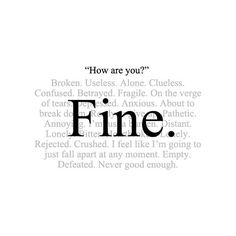
I learned first hand in this last year that emotional support for families of veterans is crucial. I want all the families to be able to ask for help if they need it. Doing this alone should not even be an option.
Veteran issues are not and should never be viewed as political. We have an all-volunteer military from all walks of life, who have risked life and limb and a variety of illnesses, so we—civilians, didn’t have to go to war. We owe them. So, no matter what side of the political fence you are on—I hope you have an interest in helping me help them. If you can help spread needed information, and resources for vets and families—I will be forever grateful to you.
May the New Year bring us peace around the world. A lofty wish, I know. But if enough people really want that- it will happen. I learned this year—you can change the tide; you just need the right people to help you.
Below are some helpful links if you are in need of help. 

POST TRAUMATIC STRESS AWARENESS

JUNE IS NATIONAL PTSD AWARENESS MONTH
Every year I focus on Combat PTSD because that is what I have studied the most.  I usually write something about it. I usually explain what it is. Everyone should know these two things by now. If you don’t know—look it up. Google it, google it with my name you’ll find several articles and one radio piece.
So this year I am including a different angle of PTSD. This year I’m writing about how these soldiers, sailors, Marines & airmen who were once hailed as heroes by the general public, are often treated with disdain when they suffer from PTSD. I say suffer… I mean suffer. They suffer, their families suffer, their friends suffer, but most of the people who reaped the benefits of their service and sacrifice, they don’t suffer at all. Some of them don’t even have the decency to vote. The whole freedom thing– shat upon.
TO FULLY UNDERSTAND…
PTSD you have to live it. Not necessarily have it—but live it. If you have a loved one who has PTSD (also called PTS) then you know about the anxiety attacks, the anger issues, the nightmares, the confusion, the depression, the total lack of giving a shit, and the inability for some to function without caretakers. The drinking and drugs are mostly by-products, but surely part of the problem. And, sadly- the saddest of all, is that sometimes they give up and commit suicide. 22 Veterans commit suicide a day. 22 A DAY.
Trips to the VA are too confusing for some. Go to this office for this paper and that office for that paper and go see this guy in that building or this lady in this building and then when you’re through come back to this building but don’t see me see Dr. So & So … and so on and so forth. If you are not suicidal before going there – you may well be afterward. People, us civilians, do not know that.
People ask why did you join the service in the first place?  There are as many answers for that as there are people in the service. After 9-11, a lot of them joined.  Even though most of them grew up with Vietnam War Vets in their family, and Korean Conflict vets too, they heard stories, they knew Uncle Joe was never the same after Vietnam. They knew the story of Aunt Peggy who was a nurse in Vietnam then came home and drank herself to death.  But, they joined.  Some of them joined for noble reasons, some were running away from what they were in, some were thinking of their future, some wanted the free education, most of them—did not think they would die. Most of them did not think they would lose arms and legs and eyes, and hearing and skin, and I bet none of them thought they would lose their minds.
I have studied PTSD now for about 9 years. Before it walked through my door, it walked through the doors of people I knew. When I heard them talk about their loved ones, sometimes it was with anger or confusion and sometimes it was with an abundance of empathy and love. Sometimes – all of the above. That made me realize that I needed to fully understand the complexities before I wrote about it or met it head-on.
PTS has become pervasive among our troops. We managed to turn a blind eye to the Vietnam veterans that came home with it. We called them drug addicts (and baby killers)  and threw them away. But things are different now. Some people know better, and those people spend every waking hour doing something about it by educating everyone they meet—PTS is not a made up condition. It’s not a weakness. It’s a wound. It’s a scar. It’s a war within.
STOP BLAMING THE WARRIORS…
They were mostly 18 years old when they joined. They had no idea what death and destruction would do to them. (And most of their parents had no idea either.)  Even those that thought they might know— thought they were smarter than everyone else—they didn’t know either. So instead of blaming the warriors or even the wars that have already taken place, start finding ways to make peace in the world. Start finding common dominators instead of differences. Stop using religion to hate. Stop voting for war. And sure—the bad guys are the bad guys, and they have to be dealt with—but don’t sign up our troops until all other avenues are exhausted. Don’t be a knee jerk. Don’t hate just because. Try to figure out why.
Traumatic Brain Injury (TBI), and PTS are the signature wounds of the Middle East wars. Studies show that 14-20 % of Veterans from Iraq (OIF) and Afghanistan (OEF) have PTSD.  50% of those with PTSD do not seek treatment. Out of the half that seeks treatment, only half of them get “minimally adequate” treatment (RAND study) 19% of veterans may have a traumatic brain injury (TBI) Over 260,000 veterans from OIF and OEF so far have been diagnosed with TBI. Traumatic brain injury is much more common in the general population than  previously thought: according to the CDC, over 1,700,000 Americans have a traumatic brain injury each year; in Canada 20% of teens had TBI resulting in hospital admission or that involved over 5 minutes of unconsciousness (VA surgeon reporting in BBC News) 7% of veterans have both post-traumatic stress disorder and traumatic brain injury. The rates of post-traumatic stress are greater for these wars than prior conflicts.
HOW CAN WE HELP?
I’m glad you asked. First- have compassion. Don’t assume someone is a bum or a drug addict or a loser because their life isn’t going the way you think it should. Families and loved ones need to educate themselves as much as possible. And if needed, get your own counseling to help you navigate the difficult days.
Clearly, it’s best to let the professionals deal with such a delicate issue. But it’s good to understand some of the triggers and help the Vet avoid them if you have the opportunity.  Check the link for more information.
You can donate to organizations that help veterans with PTS and /or TBI. (see below)
You can volunteer to help navigate the VA process (there is training available)
Just Listen – don’t ask any questions if you are not a combat veteran. Empathy does not extend to knowledge.
A safe way to check in without being intrusive is to ask on a scale of 1-10 how are you doing?  You’ll be surprised how many of them will tell you the truth.
If you know a vet that you suspect has PTSD, carry the VA Hotline number and offer it to him/her.


FOR MORE INFORMATION
Donate to:  (vetted)

A Hero You Won’t Hear About

st1\:*{behavior:url(#ieooui) }

Anyone can have PTSD, it’s not just a military issue. But combat veterans are suffering from PTSD at alarming numbers and there are simply not enough resources to help them- if indeed they are able to ask for help at all.
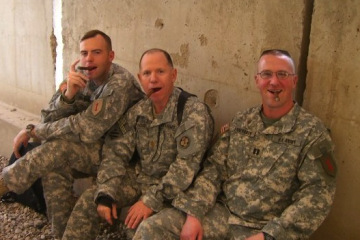
Dr.Linnerooth (on right) enjoying a cigar break.
Almost two weeks ago, the world lost another veteran to suicide. But he wasn’t just any veteran. He was a mental health professional who helped thousands of active duty and veterans make it to the next day. His first duty was to keep the troops from committing suicide.  Dr. Peter Linnerooth, a Bronze Star winning psychologist, a true hero, lost his battle with PTSD and took his own life five years after his active duty service to the Army.
The time he spent in Iraq was at the height of the war when the bloodiest battles took place and as an active duty member of the Army and a health professional, he would pitch in during mass causality events. It’s no wonder some of these events haunted him. Witnessing carnage of that magnitude would have an effect on the most grizzled warriors- let alone a lifesaver.
When Linnerooth returned to civilian life, he continued his work at Veterans Administration hospitals. First at the Santa Cruz County Vet Center in Capitola, then the Reno, Nevada Veterans Administration. He helped veterans suffering with mental health issues even while fighting his own demons.  
Dr. Linnerooth was extremely frustrated by the lack of  concern by the Army. A 2010 article titled Invisible Wounds: Mental Health and the Military, Time Magazine, quoted Dr. Linnerooth. “The Army has been criminally negligent,” says Captain Peter Linnerooth, an Army psychologist for nearly five years until 2008, who notes that the service has had a difficult time finding psychiatrists to care for combat vets, which puts even more pressure–“and way too much burnout”–on those who stay.

We owe our active duty troops and our veterans more than this. Through November of this year, 177 active-duty soldiers had committed suicide compared to 165 during all of 2011 and 156 in 2010. In all of 2012, 176 soldiers were killed in action, all while serving in Operation Enduring Freedom, according to DOD.
These numbers are not going to get better. If the war(s) end tomorrow we will still have 21.8 million veterans – many of whom are homeless, jobless and some in dire need of mental health care. Even veterans that are seemingly doing well may be struggling with PTSD and trying to hide it. The military mindset makes it extremely difficult if not impossible to express a need for help. 

I have heard people say (stupidly) that WW2 Veterans just pulled themselves up by their bootstraps and carried on… but I can assure you that is not quite the way it was. My own Great Uncle helped pick up the bodies and body parts of Marines on Iwo Jima and into his 90’s and until his death at 91, shook when any war was mentioned. They suffered in silence, but they suffered greatly- and still to this day have flashbacks and nightmares.  According to one study, “The suicide rate among these (WW2) veterans is roughly double the rate of veterans under 35, those who are returning home from Iraq and Afghanistan.” 
Since my own son returned from Iraq, in 2007, I have tried to raise the awareness of Combat PTSD. Like most things – unless it affects you personally PTSD is not something people are interested in. Many of the people with little or no interest in this matter will be out on the July 4th, in the parade, or on the sidelines, waving their flags, drinking their beers or pink lemonade and having a good time. So please remember when you are there, we are celebrating on the backs of these fine men and women who have sacrificed their lives, their limbs and in many cases their mental health for the sake of our country.
Try not to make assumptions about the homeless vet living under the bridge and drinking himself to death. A slow suicide is still a suicide and these men and women are everyone’s responsibility- we owe it to them to help- at the very least- we owe them some compassion and a huge thank you for their sacrifice.

If you are a veteran and thinking about suicide I beg you to check out this site and call the Suicide Hotline. You will be talking to people who understand your pain.

If you know someone that is suffering from combat related PTSD and would like to help them or understand what they are going through, I urge you to visit this website: Hearts Toward Home
Dr. Cantrell has helped thousands of active duty, veterans and their families work through their PTSD and related issues.  In my book, she is a hero too.

Save Our Veterans

They come home as heroes. We – their families and loved ones hang banners, meet buses and wave flags. We are so proud. So relieved. We check their faces for signs of stress. We look at them with a magnifying glass. Still, we don’t see it.

It doesn’t take us long to forget their reality. I bet you can’t wait to get a job, go to school, get married, have kids. Whoa, they say. Hold up a minute- I need to chill a little here.

So, they party and spend their war money. We know the signs, we all read up on this before they come home. But, but, what about that job Uncle Mike wants to give you? We can’t seem to help ourselves.

They are depressed. They sleep. They lock themselves in their rooms and don’t come out for days, sometimes months. They go to bars and fight. They buy their dead buddies drinks and won’t let anyone sit on the bar stool where the drink is sitting. They cry.

I’ll take you to the VA if you need a ride, we tell them. We are met with a blank stare. Or worse. They can’t sleep. When they do sleep they have nightmares. They wake up swinging, hit whoever is in their way. Their guilt increases. They can’t help themselves. They drink some more. They take the pills the VA hands out like candy.

They are reckless. They cheated the odds before why not again? They ride motorcycles, drive fast cars, jump off cliffs with paper wings, walk dark alleys, sleep with strangers. Risk becomes their high.

They rant. They rave. They don’t give a fuck. They hate you. They hate life. Five, six, seven years later. Still holed up in a small, dark room. Can’t get dressed. Can’t watch the news. Can’t read a book. Can’t take a piss without punching the bathroom wall.

Our heroes. Who’re their heroes? Can’t be us. We haven’t done shit for them. Clean your room you’ll feel better. Get a haircut you’ll feel better. You just need to get a job, meet a nice girl, nice guy, get a dog, have some kids, you’ll be fine. Trust me.

They hurt themselves. Some of them need those scars on the outside to explain why the inside is so messed up. They long for war days. It was easier, they tell us. I’d rather be shot at all day long than try to find a fucking job in California, Nebraska, Oklahoma…pick a state.

This is a call out. I’m calling you out to get them some help. We owe them. If you are one of those people that say, I never asked anyone to go to war for me. Then I hope you never need my help. I hope you never need THEIR help. (and please don’t be my friend on anything)

Our heroes are dying before our very eyes. For some, suicide is the only way- because they can’t figure out how to live in this world. We can help them. But we have to be dogged in our resolve. We cannot give up because we hit a few bumps in the road. These are our sons, our daughters, our husbands, wives, nephews, nieces, cousins, neighbors. FRIENDS.