My Manic 2015

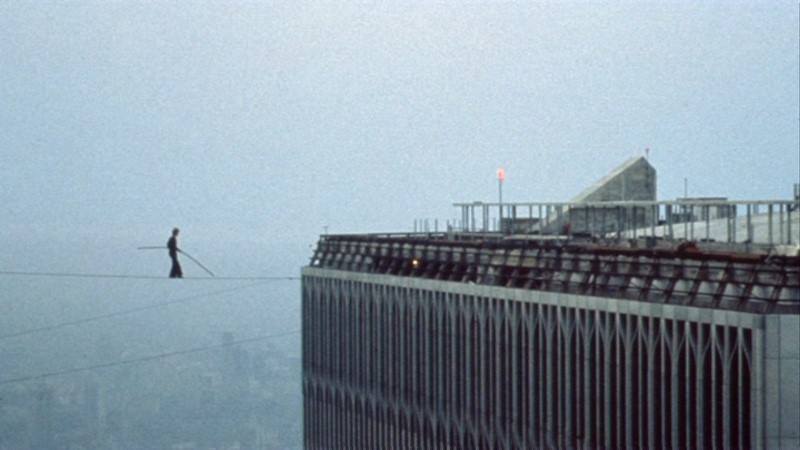
It was a hard year and my best year too. A manic year really. My highest high and my lowest low came simultaneously. As one life was entering –another was slipping away, and I did a balancing act that would rival Philippe Petit, while helping others not fall off their rope. Take my hand. Take my hand. Take my hand.  

I felt completely alone, battling demons that were taking away the love of my life—the air in my lungs. And suddenly 30 or so of my best friends and family surrounded me, lifted me up and supported me through the following months, so I could help the people that needed me.
Then my light arrived. My little love arrived with healing powers, the likes of which are for fairytales only—not real life. Certainly not my life.

He arrived in the spring, bringing hope, like all new things in spring. A ray of light, a purpose, a cause to keep not just me moving forward but others too. More than a few of us needed him. I cried tears of joy and then set out to do the impossible—and did it with the help of my friends.
It’s always like this—every year, losses and gains. People pass away, babies are born. It’s the way of the world. But this year was different. It was a massive rescue mission, headed by old friends—some of whom are Marine Moms, others who have known me 40+ years and others who have known me fewer years, but immediately understood the urgency—the life or death of everything.
The best was going to Europe to meet my grandson thanks to my friends—and then having he and his mom stay with me for almost 3 months. No- wait. The best was my son coming back from the edge. Or maybe it was all of us together for the best Thanksgiving ever. Or maybe it was realizing what amazing friends and family I have. It’s hard to say what part of wonderful is the most wonderful.
I can say this, I am grateful.
Because I am so grateful, I plan on spending 2016 raising awareness for what I have deemed the crime of the century. PTS. Post-Traumatic Stress—specifically combat related.  And Veteran Suicide as a direct result of PTS and other injuries. If you follow me on Facebook you’ll see many posts from me regarding missing veterans, at risk veterans, homeless veterans, and their families and caretakers who suffer secondary PTS due to living in crisis mode 24/7.

I learned first hand in this last year that emotional support for families of veterans is crucial. I want all the families to be able to ask for help if they need it. Doing this alone should not even be an option.
Veteran issues are not and should never be viewed as political. We have an all-volunteer military from all walks of life, who have risked life and limb and a variety of illnesses, so we—civilians, didn’t have to go to war. We owe them. So, no matter what side of the political fence you are on—I hope you have an interest in helping me help them. If you can help spread needed information, and resources for vets and families—I will be forever grateful to you.
May the New Year bring us peace around the world. A lofty wish, I know. But if enough people really want that- it will happen. I learned this year—you can change the tide; you just need the right people to help you.
Below are some helpful links if you are in need of help. 

VETERANS DAY 2013

Iraq 2006


Every year, since 2007, when my own son became a veteran, I have written something for Veterans Day. My theme changes slightly, usually depending on the reflection I am seeing through my son’s eyes.

This year, the reflection from his eyes is a good one. At least for today, at least for this moment—he is in a good place and time. If he is dogged by nightmares, he’s not saying. I notice he keeps himself busy, like my dad used to do. Always tinkering with something—the opposite of depression sleeping. Busy hands, calm mind. Calmer mind.  (**note 2017 this is no longer the case- severe PTSD anxiety attacks, withdrawal from family and friends)

If he is in a better place- than, so too am I. But, now my focus has shifted from him to the bigger picture. A picture whose existence I have been peripherally aware of, but until now, until my own son was in the clear, walking towards peace of mind instead of down Crazyville Street, I could not focus on anything but him.
The picture I am seeing is a horrific one. It’s the stuff nightmares are made of. It’s full of suicide, depression, PTSD, diagnosed and undiagnosed brain injuries, the inability to reach the people that need us most—that deserve help the most. And, worst of all—apathy. Apathy on the part of the American people, the very people who have benefited from the missing limbs, the burned skin, the inability to think straight, the lack of attention span, the shakes, the nightmares, the alcoholism, the suicides—they could not care less.


Lately there is advertising showing buffed soldiers or Marine veterans missing body parts, modeling underwear or whatever. This is good. Maybe, Americans will be able to look these people in the eye someday and say…what?  Thank you for your sacrifice. Thank you for losing that leg, arm, eye, life as you knew it. Thank you just isn’t enough.

The latest DOD data on suicide amongst veterans is an estimated 22 Veterans will commit suicide DAILY.

According to the report: “Among cases where history of U.S. military service was reported, Veterans comprised approximately 22.2% of all suicides reported during the project period. If this prevalence estimate is assumed to be constant across all U.S. states, an estimated 22 Veterans will have died from suicide each day in the calendar year 2010.”
I suspect the actual number is really higher. They won’t classify death from alcohol or drug overdose as suicide—but for many veterans (and civilians too) that is exactly what it is. I call it slow suicide.
This report notes the following: During the Iraq War, 4,475 U.S. service members were killed and 32,220 were wounded; in Afghanistan, 2,165 have been killed and 18,230 wounded through Feb. 5, 2013. Among service members deployed in these conflicts, 103,792 were diagnosed with post-traumatic stress disorder (PTSD) over the period 2002 to December 2012. Over that same period, 253,330 service members were diagnosed with a Traumatic Brain Injury (TBI) of some kind. As a result of battle injuries in the Iraq War, 991 service members received wounds that required amputations; 797 lost major limbs, such as a leg. In Afghanistan, 724 have had to undergo amputations, with 696 losing a major limb. –

According to information obtained through the VA, there were 62,619 homeless veterans in the United States in January 2012. I’m willing to bet there were more then and there are many more now. This is disgraceful and unacceptable. And, please don’t tell me some of them want to live this way. If that is what you want to tell yourself to make yourself feel better then great—but please don’t expect me or anyone else with a brain to believe it.


Here are some facts from the not for profit Greendoors, based in Texas.
  • The number of homeless female veterans is on the rise: in 2006, there were 150 homeless female veterans of the Iraq and Afghanistan wars; in 2011, there were 1,700. That same year, 18% of homeless veterans assisted by the VA were women. Comparison studies conducted by HUD show that female veterans are two to three times more likely to be homeless than any other group in the US adult population.
  • Veterans between the ages of 18 and 30 are twice as likely as adults in the general population to be homeless, and the risk of homelessness increases significantly among young veterans who are poor.
  • Roughly 56% of all homeless veterans are African-American or Hispanic, despite only accounting for 12.8% and 15.4% of the U.S. population respectively.
  • About 53% of individual homeless veterans have disabilities, compared with 41%of homeless non-veteran individuals.
  • Half suffer from mental illness; two-thirds suffer from substance abuse problems; and many from dual diagnosis (which is defined as a person struggling with both mental illness and a substance abuse problem).

  • Homeless veterans tend to experience homelessness longer than their non-veteran peers: Veterans spend an average of nearly six years homeless, compared to four years reported among non-veterans
There are programs all over the country trying to help homeless veterans. But, they need our help. The VA is overwhelmed with veterans right now. If you think your 2-3 hour wait at Kaiser or your local clinic is too long… try going to the VA.  Now try it with PTSD and a little bit of TBI. Try filling out reams of forms and then turning them in and waiting 6 -9 months for a reply to tell you if you qualify for disability, when you are positive that you were blown off a rooftop in Iraq and hurt your head– bad.
Volunteering at the VA is one way you and I can help. But there are other ways. You can help on a local level by finding out what resources there are for veterans in your area and asking them what you can do.

Learn how to talk to veterans. If you never served, you need to understand that you don’t really understand. Acknowledge that, and you will at least gain some respect from the veteran. Don’t ask stupid questions. (Like, did you ever kill anyone?)  A veteran will tell you what he wants to tell you.
If you know a veteran in need of assistance make a call 877-4AID-VET

If you know a veteran who may be contemplating suicide: Veterans and their loved ones can call 1-800-273-8255and Press 1, chat online at www.VeteransCrisisLine.net*, or send a text message to 838255to receive free, confidential support 24 hours a day, 7 days a week, 365 days a year, even if they are not registered with VA or enrolled in VA health care. VA also provides support for Service members through the Military Crisis Line. Service members and their families and friends can call and text the Veterans Crisis Line numbers and can chat online at www.MilitaryCrisisLine.net.
There are so many things we civilians can do to help today’s veterans and the veterans from previous wars, who have served our country, and made it possible for us to live in the free world that we live in.
Most of us can’t write a big old fat check to our favorite charity. But there are still ways to help raise funds for these not for profit organizations that truly help our veterans. Be sure you investigate the organization thoroughly before donating time or money.  
If you can’t volunteer, then just do this. Next time you see someone wearing a USMC hat, or a Navy hat, or an Army jacket. Ask them if they are a veteran. If they say yes—shake their hand. Look them in the eye and shake their hand– and then say thank you, and mean it.
Resources for veterans and their loved ones:


PTSD/ SUICIDE
Hearts Toward Home International – Dr. Bridgett Cantrell


HOMELESS


***You can find more and local resources by googling key words and adding your city.


PTSD AWARENESS DAY

st1\:*{behavior:url(#ieooui) }

I’m not sure why we have to have specific days, weeks or months of the year to raise awareness on any number of issues that we should all be aware of all the time. I’m declaring today the day we recognize combat related PTSD (Post Traumatic Stress Disorder), and tomorrow too. And every day after that.
Combat PTSD has been front and center in the news for months. Maybe some people didn’t realize it though since not everyone calls a spade a shovel, like I do.
My awareness of combat related PTSD started long before it would personally affect me. Long before it was called PTSD. When I was about 10 years old, my mother told me that my favorite Great Uncle would “Never be the same after Iwo Jima.”  He never was.
Later, much later and shortly before his death at 89, he told me about piling the dead bodies and body parts and collecting their dog tags. He said he would never forget the carnage. There was no good war, he said.
Sixty –eight years after Iwo Jima (almost to the day) people are still in denial about Soldiers Heart, Shell Shock, Combat Fatigue, Post-Vietnam Syndrome and finally PTSD. It’s all the same – all these different names for the same thing.
The people in denial are the masses of Americans who may or may not read the news every day and for whatever reason are unable to connect the dots, the dots that are sometimes so blatant, so bright red, so screamingly apparent that I don’t know how anyone can miss them.  (I’m only talking about the US here- even though other countries have the same thing- some to such a degree the country as a whole may suffer.)
There are some military families that are in denial too. They think if their returning soldier or Marine just gets a job, just gets married, just has kids, just stops drinking, just comes out of their room, just acts normal, that everything will be fine. This is a stupid assumption and wishful thinking.
The more likely scenario is that these soldiers, sailors and Marines will come home from combat and try to assimilate but will not be able to relate to people who have not seen what they have seen nor done what they have had to do. They will drink too much, some will take medication (legal and illegal) some will take risks that no sane person would take, some will become sex addicts, some will become depressed and isolate, some will be angry, some will commit crimes and some will commit suicide. In fact, according to the US Department of Veterans Affairs, twenty–two veterans commit suicide a day. That is roughly one per 1.09 hours. Are you okay with that? I’m not.
Right now, there are approximately 21.5 Million Veterans in the United States. An estimated 62,619 are homeless. (I think that is a low estimate). The number of Veterans suffering from PTSD is almost impossible to figure since so often is it unreported and untreated and the Department of Veteran Affairs tracks it by conflict. Almost 50% of Vietnam vets suffered from PTSD. (They also had half the country hating them when they returned)  The Department of Veterans Affairs has quietly released a new report on post-traumatic stress disorder, showing that since 9/11, nearly 30 percent of the 834,463Iraq and Afghanistan War veterans treated at V.A. hospitals and clinics have been diagnosed with PTSD. (I would imagine the unreported would bring it up to 50%)
Now, you may wonder why I think you should be aware of these alarming numbers.  This is why. They need our help. They need understanding- and we have to educate ourselves so we don’t make the same mistakes the generation before us did with the Vietnam vets. The men and women coming home with PTSD are not feeling the love from their fellow Americans and in some cases they feel like their branch of service has used them up and then thrown them away. Sometimes it takes years for them to be able to work in the civilian world. Some may never get there. Some are so broken down they can barely function and need caregivers to make sure they get up, get dressed, eat and go to the VA.
We are talking about 22 year olds, 25 year olds, 30-year-old men, and women who may look twice their age due the overwhelming load they carry.  We – and by we I mean every single American, should be helping them carry the load.
The murder of Chris Kyle was a horrendous event and in my mind brought to the forefront how horrible PTSD can be… if we don’t learn to recognize it and deal with it as a by product of war. Plan on it, budget for it, have the medical facilities and faculty ready for it and most importantly, make it easier for these people to get the help they need.  Eddie Ray Routh had recently been released from the hospital- his parents pleas to the psychiatric hospital to keep him, fell on deaf ears. I have to wonder why? Was it money?
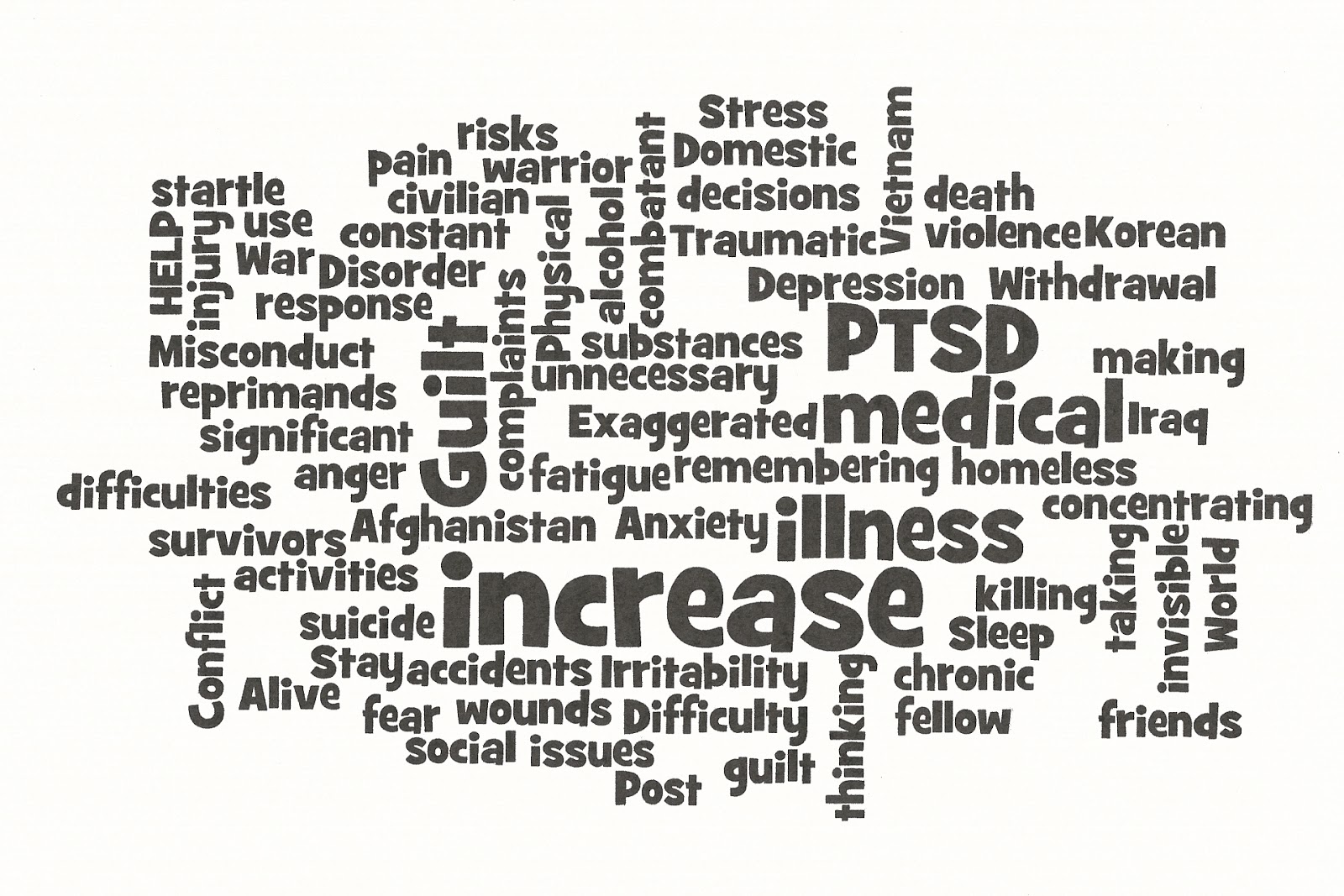
Most PTSD is not going to elevate to a murderous level, and maybe anger is not always part of combat PTSD, but it is often enough. The following are just some of the symptoms of combat related PTSD.
  • Irritability/ anger
  • Sleep difficulties and constant fatigue
  • Difficulty concentrating, remembering, thinking, making decisions
  • Depression
  • Guilt over killing a combatant or civilian
  • Guilt over the death or injury of a fellow warrior (survivors guilt)
  • Anxiety
  • Exaggerated startle response
  • Withdrawal from social activities and friends
  • An increase in accidents
  • An increase in taking unnecessary risks
  • Physical complaints (chronic pain)  and medical illness or fear of medical illness
  • A significant increase in the use of alcohol and other substances
  • Domestic violence
  • Misconduct issues or reprimands
The Soldiers, Marines, Airmen, and Sailors-  who volunteered to go into the service post 911 knew they could die. Of course, an 18 year old doesn’t really know what will happen to him if he lives to tell the story. In fact- few people will know what will happen. Parents themselves focus on one thing. Stay Alive. When they get home mom counts fingers and toes just like the day they were born. No visible damage and yay- everything is going to be fine.
For many of them, everything will be okay. For some, symptoms will not present for years. For others, the onset will be almost immediate- some before they are separated from the service.
The military has to do a better job. I was hopeful when General Shinseki the US Secretary of Veteran Affairs, was appointed to his position. Since that time, over four years ago, I have seen little progress in the area of combat related PTSD and the process that defeats many veterans 10 minutes after they walk through the VA doors.
There are civilians doing the job though. One such civilian is Dr.Bridget Cantrell. Dr. Cantrell is the founder of Hearts Toward Home International, which is a non profit organization dedicated to helping combat veterans and their family members. 
I first met Dr. Cantrell in 2006 at a Marines Parents Conference in Houston, Texas. My son, a Marine Corps Rifleman at the time, was getting ready to deploy to Iraq. Dr. Cantrell and her writing partner Chuck Dean, (a Vietnam vet) had just written Down Range, to Iraq and Back, A book that addresses PTSD our military personnel experience when returning from combat. After attending the panel discussion, I knew PTSD was something I had to fully understand. 
Since that time, Dr. Cantrell has helped me- help my son. She has written 3 more books Once a Warrior, Wired for Life, (with Chuck Dean)  Souls Under Siege: The Effects of Multiple Troop Deployments-and How to Weather the Storm and a workbook that accompanies Once a Warrior, and has two more coming out shortly.She devotes her life to helping these veterans.
There are other civilians doing their best to make a difference for our veterans. And together we can all make a difference.  First, though there has to be awareness, there has to be significant comprehension of what combat related PTSD is and what we as civilians can do to help. Removing the stigma is one way to help these men and women get the professional  help they need.
Let’s not wait for the PTSD Awareness Day (I think it’s sometime in June) . Let’s not wait until another Soldier, Sailor, Airmen or Marine hurts someone or commits suicide. Let’s start today. Spread the word-tell, let your Representativesand Senators  that you want to see some help for our veterans. If you can, donate or volunteer your time to the organizations that make a difference in the lives of these men and women.
And if you notice someone needing help, call the VA Hotline at  1-800-273-8255 Press 1
They fought for us- and now we need to fight for them.
~~~~~~~~~~~~~~~~~~~~~~~~~~~~

Additional resources from (USC) University of Southern California –

Military Mental Health Resource Guide to Depression, TBI & PTSD

And if you are interested in a career in  Military Social Work

MSW@USC


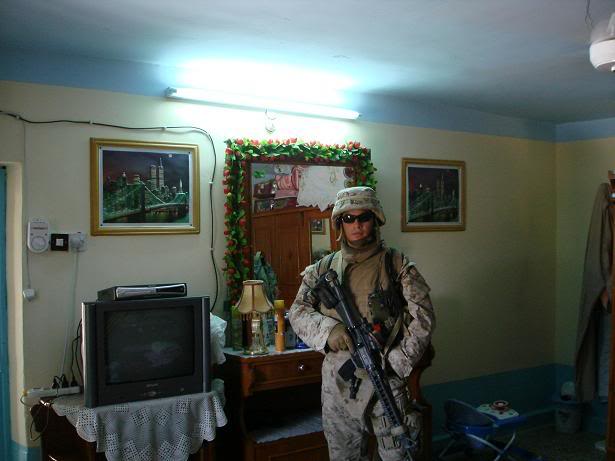
This is my Marine (who joined the USMC in 2003 the minute he turned 18) in a house in Iraq. Those are pictures of the Twin Towers on both sides of the mirror in the background. He wasn’t there to make money, or see the world, or get his college paid for. He was there because he thought he could make a difference. I think he did, and I can only repay him by making sure he and his brothers-in-arms, are taken care of. 


A Hero You Won’t Hear About

st1\:*{behavior:url(#ieooui) }

Anyone can have PTSD, it’s not just a military issue. But combat veterans are suffering from PTSD at alarming numbers and there are simply not enough resources to help them- if indeed they are able to ask for help at all.
Dr.Linnerooth (on right) enjoying a cigar break.
Almost two weeks ago, the world lost another veteran to suicide. But he wasn’t just any veteran. He was a mental health professional who helped thousands of active duty and veterans make it to the next day. His first duty was to keep the troops from committing suicide.  Dr. Peter Linnerooth, a Bronze Star winning psychologist, a true hero, lost his battle with PTSD and took his own life five years after his active duty service to the Army.
The time he spent in Iraq was at the height of the war when the bloodiest battles took place and as an active duty member of the Army and a health professional, he would pitch in during mass causality events. It’s no wonder some of these events haunted him. Witnessing carnage of that magnitude would have an effect on the most grizzled warriors- let alone a lifesaver.
When Linnerooth returned to civilian life, he continued his work at Veterans Administration hospitals. First at the Santa Cruz County Vet Center in Capitola, then the Reno, Nevada Veterans Administration. He helped veterans suffering with mental health issues even while fighting his own demons.  
Dr. Linnerooth was extremely frustrated by the lack of  concern by the Army. A 2010 article titled Invisible Wounds: Mental Health and the Military, Time Magazine, quoted Dr. Linnerooth. “The Army has been criminally negligent,” says Captain Peter Linnerooth, an Army psychologist for nearly five years until 2008, who notes that the service has had a difficult time finding psychiatrists to care for combat vets, which puts even more pressure–“and way too much burnout”–on those who stay.

We owe our active duty troops and our veterans more than this. Through November of this year, 177 active-duty soldiers had committed suicide compared to 165 during all of 2011 and 156 in 2010. In all of 2012, 176 soldiers were killed in action, all while serving in Operation Enduring Freedom, according to DOD.
These numbers are not going to get better. If the war(s) end tomorrow we will still have 21.8 million veterans – many of whom are homeless, jobless and some in dire need of mental health care. Even veterans that are seemingly doing well may be struggling with PTSD and trying to hide it. The military mindset makes it extremely difficult if not impossible to express a need for help. 

I have heard people say (stupidly) that WW2 Veterans just pulled themselves up by their bootstraps and carried on… but I can assure you that is not quite the way it was. My own Great Uncle helped pick up the bodies and body parts of Marines on Iwo Jima and into his 90’s and until his death at 91, shook when any war was mentioned. They suffered in silence, but they suffered greatly- and still to this day have flashbacks and nightmares.  According to one study, “The suicide rate among these (WW2) veterans is roughly double the rate of veterans under 35, those who are returning home from Iraq and Afghanistan.” 
Since my own son returned from Iraq, in 2007, I have tried to raise the awareness of Combat PTSD. Like most things – unless it affects you personally PTSD is not something people are interested in. Many of the people with little or no interest in this matter will be out on the July 4th, in the parade, or on the sidelines, waving their flags, drinking their beers or pink lemonade and having a good time. So please remember when you are there, we are celebrating on the backs of these fine men and women who have sacrificed their lives, their limbs and in many cases their mental health for the sake of our country.
Try not to make assumptions about the homeless vet living under the bridge and drinking himself to death. A slow suicide is still a suicide and these men and women are everyone’s responsibility- we owe it to them to help- at the very least- we owe them some compassion and a huge thank you for their sacrifice.

If you are a veteran and thinking about suicide I beg you to check out this site and call the Suicide Hotline. You will be talking to people who understand your pain.

If you know someone that is suffering from combat related PTSD and would like to help them or understand what they are going through, I urge you to visit this website: Hearts Toward Home
Dr. Cantrell has helped thousands of active duty, veterans and their families work through their PTSD and related issues.  In my book, she is a hero too.

Don’t Waste It- Memorial Day 2017

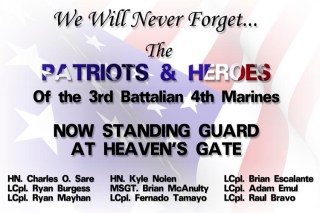
The lives lost in my son’s unit 2006-7 Iraq 

In memory of all who gave their lives for their country. This is a republished blog from 2012. Sad to say –things have not changed at all. A lot people will have fun this Memorial Day and not give a second thought to how that fun was made possible. Fun is great- I support it- but please remember the folks that can’t celebrate a day because they gave their lives so you could. KW 2017.

~~~~~~~~~~~~~~~~~

All week I have been thinking about what I would write about for Memorial Day. I’ve been told I come off preachy sometimes, but really I know most of the people who read my blog and I fully understand I would be preaching to the choir if I were preaching about this day. The one theme that kept coming back to me regarding Memorial Day, was the theme that came from the movie “Saving Private Ryan” when Tom Hanks was dying and he looked at Matt Daman and said, “Don’t waste it.”
Don’t waste it. Don’t waste your life and don’t squander your freedom. I take that to mean don’t be a lemming. Make a difference. Think about the world and not just your little corner of it. I strive to do this. I have taught myself to be more tolerant- though I don’t always succeed. We always want people to be just like us, think just like us- and yet the world is so big that could never be possible. And that freedom, we are so privileged to have in this great country, is often taken for granted and stomped on by many of us trying to make everyone fit into our groove.
Memorial Day is supposed to be about the troops killed in action. It’s not really supposed to be about thanking all our Veteran’s. But in my thinking, the best way to honor those who have died is to honor those who have lived and help them give their lives new meaning.
A few weeks ago, I wrote about the plight of many veterans suffering from PTS and TBI and about their inability to find jobs that can accommodate their disabilities. Some of them can’t work at all. Many Iraq and Afghanistan veteran’s are homeless, drug and alcohol dependent and many more are suicidal. Many of them found maneuvering the VA so difficult they just gave up and receive no medical care at all.
I’m not sure which part of this people are not understanding. While political factions argue with each other over which is the best party, while they call each other names, spread rumors with zeal, and batter each other in advertisements, our veterans are dying.
In an article written late last year Paul Rieckoff , executive director of the Iraq and Afghanistan Veterans of America said, “The suicide rate is out of control – it’s epidemic proportions right now. There are very few programs that are effective, and there’s a serious lack of national awareness.”
Read more here: VETERAN SUICIDE EPIDEMIC
A serious lack of National awareness. Still a million people will write about today and they will write about Veteran’s Day later, and people will wave their flags and argue about their right to choose, their right to pray, their right to eat fat, their right to grow pot, their right to raise their kids however they want, their right to be FREE.
Many of our veterans are not free. Some with visible scars and some without, they are shackled to their nightmares. They are buried with their friends who came home in coffins. They walk on tightrope; barely able to balance they hang on for life that is no longer dear.
Those of us that understand all this owe it to these men and women, the walking wounded, to wake the Nation up. We owe it to them to have intelligent conversations that are not politically biased, but about them alone. We owe it to them to stop blaming politicians for something WE can change if we unite in our message that our veteran’s needs must come before one more war, one more special interest, and one more barrel of oil, one more study of frog sex, one more dime spent on any frivolous bull shit thing.
After 11 years of constant war, almost every single person I know has known someone that either has been in the war or been deeply affected somehow. Everyone I talk to has had a son, daughter, sister, brother, nephew, cousin or friend serve in one of the two last wars.
A staggering 45 percent of the 1.6 million veterans from the wars in Iraq and Afghanistan are now seeking compensation for injuries they say are service-related. That is more than double the estimate of 21 percent who filed such claims after some other relatively recent wars, top government officials told The Associated Press.
I have not backed off my campaign to raise awareness. If I am preaching – so be it. I don’t know any other way to get the word out. I’m shooting from the hip like I always do. I’m hoping you will share this Memorial Day message with your friends and family. I’m hoping it will make its way to people who want to make things better for our veterans. 1.6 million veterans need our help.
Don’t waste it. If you don’t know the meaning of life- give your own life meaning. Leave this world a better place by repaying the greatest gift given to most of us and earned by so few. The gift of freedom.
Things can change. If you have even a smidgen of the bravery some of the men and women who sacrificed their lives for our freedoms have, you can help make a difference. Speak up for them, don’t just wave your flags and shout out America the Beautiful, or the Pledge of Allegiance. We owe them – don’t you think?

Save Our Veterans

They come home as heroes. We – their families and loved ones hang banners, meet buses and wave flags. We are so proud. So relieved. We check their faces for signs of stress. We look at them with a magnifying glass. Still, we don’t see it.

It doesn’t take us long to forget their reality. I bet you can’t wait to get a job, go to school, get married, have kids. Whoa, they say. Hold up a minute- I need to chill a little here.

So, they party and spend their war money. We know the signs, we all read up on this before they come home. But, but, what about that job Uncle Mike wants to give you? We can’t seem to help ourselves.

They are depressed. They sleep. They lock themselves in their rooms and don’t come out for days, sometimes months. They go to bars and fight. They buy their dead buddies drinks and won’t let anyone sit on the bar stool where the drink is sitting. They cry.

I’ll take you to the VA if you need a ride, we tell them. We are met with a blank stare. Or worse. They can’t sleep. When they do sleep they have nightmares. They wake up swinging, hit whoever is in their way. Their guilt increases. They can’t help themselves. They drink some more. They take the pills the VA hands out like candy.

They are reckless. They cheated the odds before why not again? They ride motorcycles, drive fast cars, jump off cliffs with paper wings, walk dark alleys, sleep with strangers. Risk becomes their high.

They rant. They rave. They don’t give a fuck. They hate you. They hate life. Five, six, seven years later. Still holed up in a small, dark room. Can’t get dressed. Can’t watch the news. Can’t read a book. Can’t take a piss without punching the bathroom wall.

Our heroes. Who’re their heroes? Can’t be us. We haven’t done shit for them. Clean your room you’ll feel better. Get a haircut you’ll feel better. You just need to get a job, meet a nice girl, nice guy, get a dog, have some kids, you’ll be fine. Trust me.

They hurt themselves. Some of them need those scars on the outside to explain why the inside is so messed up. They long for war days. It was easier, they tell us. I’d rather be shot at all day long than try to find a fucking job in California, Nebraska, Oklahoma…pick a state.

This is a call out. I’m calling you out to get them some help. We owe them. If you are one of those people that say, I never asked anyone to go to war for me. Then I hope you never need my help. I hope you never need THEIR help. (and please don’t be my friend on anything)

Our heroes are dying before our very eyes. For some, suicide is the only way- because they can’t figure out how to live in this world. We can help them. But we have to be dogged in our resolve. We cannot give up because we hit a few bumps in the road. These are our sons, our daughters, our husbands, wives, nephews, nieces, cousins, neighbors. FRIENDS.